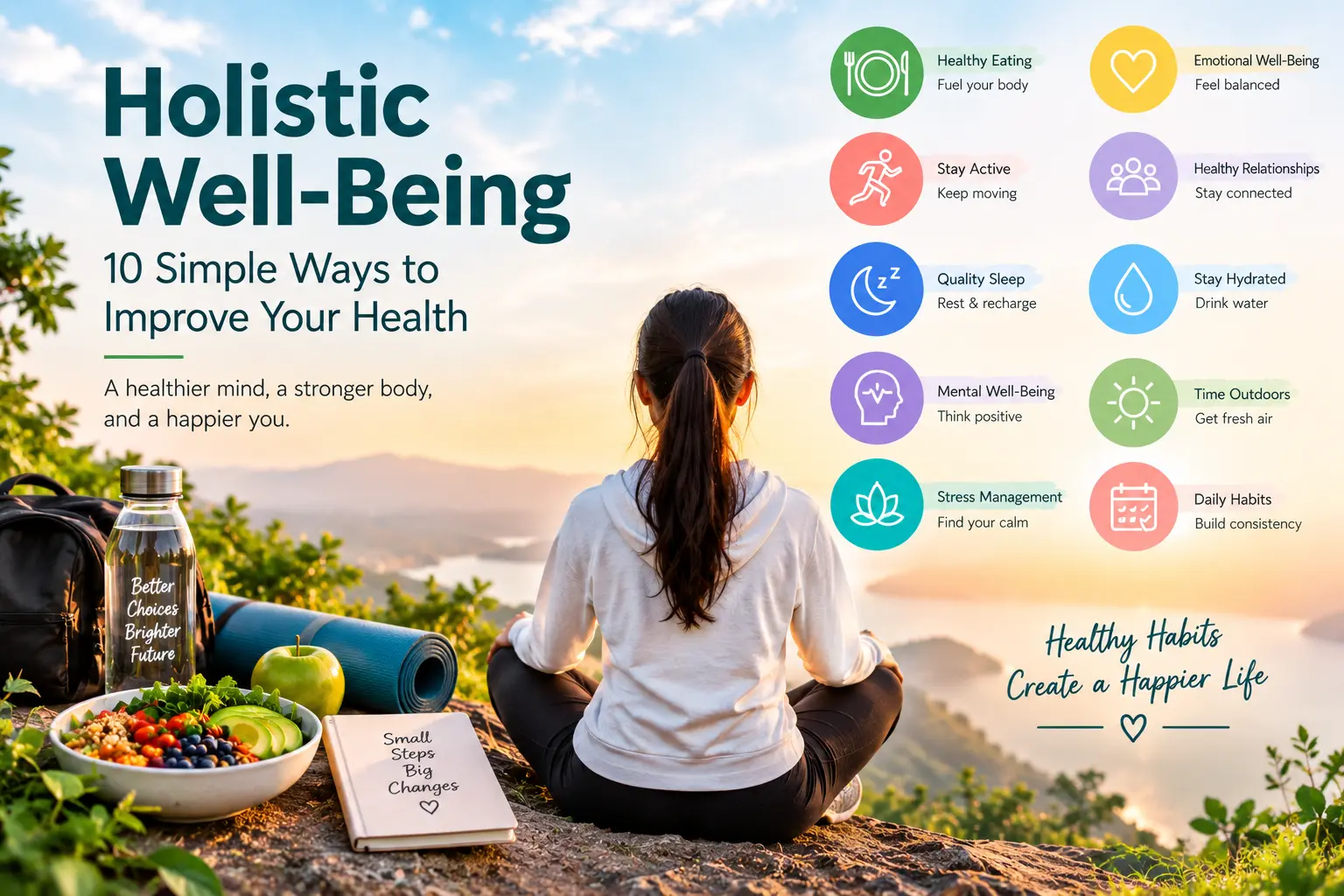
Holistic well-being is about taking care of your whole self—not just your physical health. It includes your mental, emotional, social, and physical well-being and how these areas work together in everyday life.
With busy schedules, work responsibilities, and everyday stress, maintaining a healthy lifestyle can sometimes feel difficult. However, improving your holistic well-being does not require completely changing your life. Small, consistent habits can make a meaningful difference over time.
In this guide, we will explore 10 simple ways to improve holistic well-being and create a healthier, more balanced lifestyle.
What Is Holistic Well-Being?
Holistic well-being is an approach to health that considers different parts of your life together. Instead of focusing only on exercise or nutrition, it looks at your physical health, mental well-being, emotional balance, relationships, sleep, and daily habits.
The goal is to create a lifestyle that supports your overall well-being in a sustainable way.
1. Eat a Balanced Diet
Nutrition is an important part of holistic well-being. Your body needs a variety of nutrients to support normal functions and everyday activities.
Try to include fruits, vegetables, whole grains, protein sources, and healthy fats in your regular meals. Choosing a variety of nutritious foods can make it easier to maintain a balanced diet.
You do not need to follow an extremely restrictive diet. Instead, focus on realistic eating habits that you can maintain over the long term.
2. Stay Physically Active
Regular physical activity is another important part of a healthy lifestyle. Exercise can include much more than going to the gym.
Walking, cycling, swimming, stretching, dancing, and recreational sports are all ways to add movement to your day.
The most important thing is to find physical activities that you enjoy and can perform consistently.
3. Prioritize Quality Sleep
Sleep plays an important role in physical and mental well-being. A consistent sleep routine can help you feel more prepared for everyday activities.
Try to maintain regular sleeping and waking times. Creating a comfortable bedroom environment and developing a relaxing bedtime routine may also help support better sleep habits.
4. Manage Everyday Stress
Stress is a normal part of life, but finding healthy ways to manage it can support your overall well-being.
Simple activities such as walking, deep breathing, reading, listening to music, journaling, or spending time outdoors can provide opportunities to relax.
If stress becomes persistent or difficult to manage, consider speaking with a qualified healthcare professional.
5. Take Care of Your Mental Well-Being
Mental well-being is an important part of holistic wellness. Making time for yourself, enjoying hobbies, taking breaks, and maintaining supportive relationships can contribute to a healthier routine.
It is also important to recognize that seeking professional support when needed is a normal part of taking care of yourself.
6. Build Positive Relationships
Healthy social connections can contribute to overall well-being. Spending meaningful time with family, friends, colleagues, or supportive communities can help create a sense of connection.
Make time for conversations, shared activities, and relationships that contribute positively to your everyday life.
7. Drink Enough Water
Hydration is a simple but important part of maintaining a healthy lifestyle. Water helps support normal body functions and is essential for everyday health.
Keep water available throughout the day and pay attention to your body’s hydration needs.
Individual fluid requirements can vary depending on factors such as activity level, climate, and health conditions.
8. Create Healthy Daily Routines
A healthy lifestyle becomes easier to maintain when positive habits are part of your daily routine.
Consider creating a simple routine that includes:
- Regular meals
- Physical activity
- Sufficient sleep
- Time for relaxation
- Personal hobbies
- Social connection
- Time away from unnecessary distractions
You do not have to make all these changes at once. Start with one or two habits and gradually build from there.
9. Spend Time Outdoors
Spending time outdoors can be a simple way to introduce variety and movement into your day.
A walk in a park, time in a garden, or simply taking a break outside can provide an opportunity to step away from your usual environment.
Combining outdoor time with light physical activity can also make your daily routine more enjoyable.
10. Focus on Consistency, Not Perfection
One of the most important principles of holistic well-being is consistency.
You do not need to follow a perfect routine every day. Missing a workout or having an occasional unhealthy meal does not mean you have failed.
Instead, focus on returning to healthy habits and making choices that support your long-term lifestyle.
Small improvements repeated over time can become meaningful habits.
How to Start Improving Your Holistic Well-Being
If you are new to holistic wellness, start with simple and realistic goals.
For example, you could:
- Walk for 20–30 minutes each day.
- Add more fruits and vegetables to your meals.
- Create a consistent bedtime routine.
- Drink water regularly throughout the day.
- Take short breaks when you feel stressed.
- Spend more quality time with supportive people.
- Make time for hobbies and relaxation.
The best routine is one that fits your lifestyle and can realistically be maintained.
Frequently Asked Questions About Holistic Well-Being
What is holistic well-being?
Holistic well-being is an approach to health that considers physical, mental, emotional, and social aspects of a person’s overall lifestyle.
How can I improve my holistic well-being?
You can support holistic well-being by maintaining balanced nutrition, staying physically active, getting adequate sleep, managing stress, building healthy relationships, and developing sustainable daily habits.
What is the difference between holistic wellness and physical health?
Physical health focuses primarily on the condition and functioning of the body, while holistic wellness considers physical health together with mental, emotional, social, and lifestyle factors.
Why are healthy habits important?
Healthy habits can help create a consistent lifestyle that supports overall well-being. Small habits that are realistic and sustainable can be easier to maintain over time.
Can holistic well-being improve my lifestyle?
A holistic approach can encourage you to pay attention to different areas of your lifestyle rather than focusing on only one aspect of health.
Conclusion
Holistic well-being is about creating balance across different areas of your life. Healthy nutrition, regular physical activity, quality sleep, stress management, positive relationships, and consistent daily habits can all be part of a balanced lifestyle.
You do not need to make dramatic changes overnight. Start with small, realistic steps and gradually build healthier habits that fit your everyday life.
For specific medical concerns or individualized health advice, speak with a qualified healthcare professional.
References
- World Health Organization (WHO) – Healthy Diet
WHO – Healthy Diet - World Health Organization (WHO) – Physical Activity
WHO – Physical Activity - World Health Organization (WHO) – Mental Health
WHO – Mental Health
