Your digestive system does far more than simply break down the food you eat. It helps your body absorb essential nutrients, supports immune function, and interacts with trillions of microorganisms that live throughout your digestive tract.
This community of microorganisms is known as the gut microbiome. A healthy gut microbiome is influenced by many factors, including your diet, physical activity, sleep, stress levels, medications, and overall lifestyle.
Digestive problems such as occasional bloating, constipation, gas, or irregular bowel movements are common. While persistent symptoms should be evaluated by a healthcare professional, everyday habits can play an important role in supporting normal digestion.
The good news is that improving your digestive health does not necessarily require an expensive supplement or restrictive diet.
Simple habits—such as eating more fiber, drinking enough water, exercising regularly, getting adequate sleep, and choosing a variety of nutritious foods—can help support a healthier digestive system.
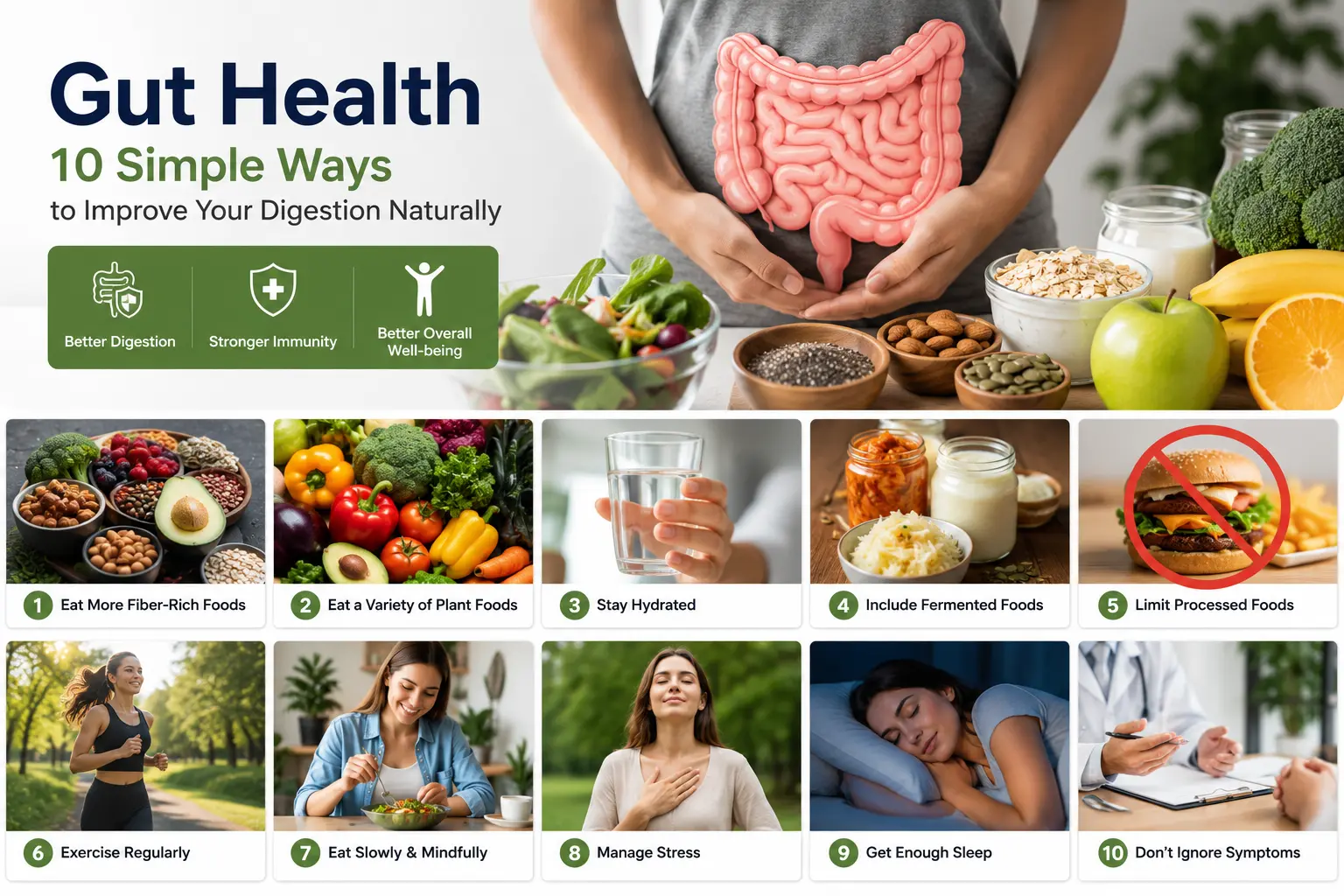
Here are 10 practical ways to improve gut health and support digestion naturally.
1. Eat More Fiber-Rich Foods
Fiber is one of the most important components of a diet that supports digestive health.
Unlike many other carbohydrates, dietary fiber is not completely broken down by the digestive system. Some types of fiber reach the large intestine, where certain gut microorganisms can ferment them.
Fiber can also help maintain regular bowel movements and support healthy stool consistency.
Good sources of fiber include:
- Oats and other whole grains
- Beans and lentils
- Apples, pears, and berries
- Broccoli and other vegetables
- Nuts and seeds
- Whole-grain bread and cereals
- Avocados
If your current diet is low in fiber, increase your intake gradually. Suddenly eating a large amount of fiber can cause temporary gas or bloating.
It is also important to drink enough fluids as you increase your fiber intake.
2. Eat a Wide Variety of Plant Foods
When it comes to gut health, variety matters.
Different plant foods contain different types of fiber and naturally occurring compounds. Eating a diverse range of fruits, vegetables, legumes, whole grains, nuts, and seeds can provide the gut microbiome with a wider variety of nutrients.
Instead of focusing on one “superfood,” try adding different foods throughout the week.
For example, your diet could include:
- Leafy green vegetables
- Carrots
- Tomatoes
- Broccoli
- Berries
- Bananas
- Beans
- Lentils
- Oats
- Whole grains
- Nuts and seeds
A colorful and varied diet is generally more useful than relying on a single food marketed as a gut-health solution.
3. Drink Enough Water
Hydration is an often-overlooked part of digestive health.
Water helps maintain normal bodily functions and can help keep stool softer. Adequate fluid intake is particularly important when you increase dietary fiber.
There is no single amount of water that is perfect for everyone. Fluid needs vary depending on factors such as activity level, climate, body size, diet, and other individual circumstances.
Rather than waiting until you are extremely thirsty, drink fluids regularly throughout the day.
If you live in a hot climate or exercise frequently, you may need more fluids than someone who is less active.
4. Include Fermented Foods in Your Diet
Some fermented foods contain live microorganisms that may contribute to a healthy gut microbiome.
Examples include:
- Yogurt with live cultures
- Kefir
- Kimchi
- Sauerkraut
- Some fermented vegetables
However, not every fermented food provides the same benefits. Some commercially prepared products may contain substantial amounts of added sugar or sodium.
When choosing yogurt, for example, check the nutrition label and consider options with live cultures and less added sugar.
Fermented foods can be part of a balanced diet, but they are not a substitute for overall healthy eating.
5. Choose Less Highly Processed Food
You do not have to completely eliminate processed foods to have a healthy diet.
However, frequently eating highly processed foods can make it harder to consume enough fiber and a broad range of nutrients.
Try making whole or minimally processed foods the foundation of most meals.
For example, instead of always choosing packaged snacks, consider:

- Fresh fruit
- Nuts
- Seeds
- Plain yogurt
- Vegetables with hummus
- Whole-grain foods
The goal is not perfection. A balanced diet can include convenience foods while still emphasizing nutritious options most of the time.
6. Exercise Regularly
Physical activity is important for overall health and may also support normal digestive function.
Regular movement can help promote bowel activity and may be particularly useful for people who experience occasional constipation.
You do not need to spend hours at the gym.
Activities such as:
- Walking
- Cycling
- Swimming
- Jogging
- Strength training
- Stretching
- Recreational sports
can help you stay active.
If you are currently inactive, start with a manageable amount of movement and gradually increase your activity.
Even a regular daily walk can be a simple way to build a more active lifestyle.
7. Slow Down While Eating
Digestion begins before food reaches your stomach.
Eating slowly and chewing food thoroughly can make meals more comfortable and may help you become more aware of fullness.
Eating too quickly can also make it easier to consume more food than you intended.
Try putting your fork down between bites, reducing distractions during meals, and giving yourself enough time to eat.
Mindful eating is not a complicated diet. It simply means paying greater attention to your food, hunger, fullness, and eating experience.
8. Manage Stress
Your digestive system and brain communicate through a complex network commonly referred to as the gut-brain axis.
Stress can influence digestive function and may contribute to symptoms such as abdominal discomfort, changes in bowel habits, or bloating in some people.
That is why supporting gut health is not only about food.
Simple stress-management strategies may include:
- Deep breathing exercises
- Meditation
- Regular physical activity
- Spending time outdoors
- Relaxation exercises
- Social activities
- Maintaining a consistent sleep routine
You do not need to eliminate stress completely. Instead, focus on developing healthy ways to manage everyday stress.
9. Prioritize Quality Sleep
Sleep affects almost every aspect of health, including metabolism, appetite, mood, immune function, and daily energy.
Poor sleep may also influence eating habits and stress levels, which can indirectly affect digestive health.
Most adults should aim for at least 7 hours of sleep per night, although individual sleep requirements vary.
To improve your sleep routine:
- Keep a consistent bedtime and wake time.
- Create a relaxing nighttime routine.
- Limit excessive caffeine later in the day.
- Reduce bright-screen exposure before bed.
- Keep your bedroom comfortable and quiet.
- Avoid large meals immediately before bedtime if they disturb your sleep.
Good sleep is not a quick fix for digestive problems, but it is an important part of overall health.
10. Pay Attention to Persistent Digestive Symptoms
Supporting gut health naturally is helpful, but lifestyle changes should not replace medical evaluation when symptoms are persistent or severe.
Occasional digestive discomfort is common. However, symptoms that continue, become worse, or interfere with daily life deserve attention.
Speak with a healthcare professional if you experience concerning symptoms such as:
- Blood in your stool
- Unexplained weight loss
- Persistent vomiting
- Severe or ongoing abdominal pain
- Difficulty swallowing
- Significant or persistent changes in bowel habits
- Persistent diarrhea or constipation
These symptoms can have many possible causes, and proper evaluation is important.
Best Foods for a Healthy Gut
There is no single food that can guarantee perfect digestive health. Instead, focus on an overall eating pattern that provides fiber, nutrients, and variety.
Some foods commonly included in a gut-supportive diet are:
- Fruits: Apples, bananas, berries, pears, oranges, and other fruits provide fiber and various vitamins and plant compounds.
- Vegetables: Broccoli, leafy greens, carrots, onions, tomatoes, and other vegetables can add fiber and nutrients to meals.
- Legumes: Beans, chickpeas, peas, and lentils are excellent sources of fiber and plant-based protein.
- Whole Grains: Oats, brown rice, barley, whole-grain bread, and other whole grains can contribute dietary fiber.
- Nuts and Seeds: Almonds, walnuts, chia seeds, flaxseeds, and other nuts and seeds provide fiber and healthy fats.
- Fermented Foods: Yogurt with live cultures, kefir, kimchi, and certain fermented vegetables can be included as part of a balanced diet.
What Can Harm Your Gut Health?
Many factors can influence digestive health. These may include:
- A diet consistently low in fiber
- Excessive intake of highly processed foods
- Inadequate fluid intake
- Physical inactivity
- Chronic stress
- Poor sleep
- Excessive alcohol consumption
- Smoking
- Certain medications or medical conditions
Not all digestive problems are caused by lifestyle. Genetics, infections, food intolerances, gastrointestinal disorders, and other medical factors can also play a role.
Do You Need Probiotic Supplements?
Probiotics are live microorganisms that may provide health benefits when consumed in adequate amounts. However, probiotic effects can vary considerably depending on the specific strain and the health condition being addressed.
This means that taking a random probiotic supplement is not necessarily the best approach for everyone.
For some people, probiotics may be useful, but others may not experience noticeable benefits.
If you are considering a probiotic supplement, particularly if you have an underlying health condition or take medication, discuss your options with a healthcare professional.
Can Gut Health Improve Quickly?
There is no fixed timeline for improving digestive health.
Some people may notice changes in bowel regularity after increasing fiber, fluids, and physical activity. Other changes may take longer and depend on diet, lifestyle, individual biology, and underlying health conditions.
The most important factor is consistency.
Instead of making extreme changes for a few days, build sustainable habits that you can maintain for months and years.
A Simple Daily Routine for Better Digestion
You do not need a complicated routine to support your digestive system.
A simple day might look like this:
Morning: Start your day with water and a fiber-rich breakfast such as oatmeal with fruit.
Afternoon: Eat a balanced lunch containing vegetables, whole grains, and a protein source.
Snack: Choose fruit, nuts, seeds, or yogurt.
Evening: Have a balanced dinner and take a comfortable walk afterward if appropriate.
Throughout the day: Drink fluids regularly, stay physically active, and avoid eating meals too quickly.
The best routine is one that fits naturally into your lifestyle.
Frequently Asked Questions
What is gut health?
Gut health describes how well your digestive system functions and includes the health of your gastrointestinal tract and the microorganisms living in it.
How can I improve my gut health naturally?
Eat a varied diet rich in fiber, drink adequate fluids, stay physically active, sleep well, manage stress, and limit excessive consumption of highly processed foods.
What is the best food for gut health?
There is no single “best” food. A varied diet containing fruits, vegetables, legumes, whole grains, nuts, seeds, and suitable fermented foods is a strong foundation for digestive health.
Is fiber good for digestion?
Yes. Fiber can support regular bowel movements and certain types of fiber can be used by beneficial gut microorganisms. Increase fiber gradually and drink adequate fluids.
Does exercise help digestion?
Regular physical activity can support normal bowel function and overall health. Walking and other moderate activities can be practical options.
Is yogurt good for gut health?
Some yogurts contain live cultures that may support the gut microbiome. Look for products containing live cultures and consider choosing options with less added sugar.
Can stress affect digestion?
Yes. The brain and digestive system communicate closely, and stress can affect digestive function and symptoms in some people.
When should I see a doctor about digestive problems?
Seek professional medical advice if symptoms are persistent, severe, worsening, or accompanied by warning signs such as blood in the stool, unexplained weight loss, persistent vomiting, or severe abdominal pain.
Final Takeaway
A healthy digestive system is supported by consistent everyday habits—not by one miracle food or expensive supplement.
Eating a wide variety of fiber-rich foods, drinking enough fluids, staying active, getting quality sleep, managing stress, eating mindfully, and paying attention to persistent symptoms can all contribute to better gut health.
Start small. Add an extra serving of vegetables, choose whole grains more often, drink water regularly, take a daily walk, or improve your sleep schedule.
Over time, these simple habits can become part of a sustainable lifestyle that supports your digestive and overall health.
References
- National Institute of Diabetes and Digestive and Kidney Diseases (NIDDK) – Digestive Diseases
NIDDK – Digestive Diseases - Harvard T.H. Chan School of Public Health – Fiber
Harvard Nutrition Source – Fiber - World Health Organization (WHO) – Healthy Diet
WHO – Healthy Diet - World Health Organization & FAO – What Are Healthy Diets?
WHO/FAO – What Are Healthy Diets?
