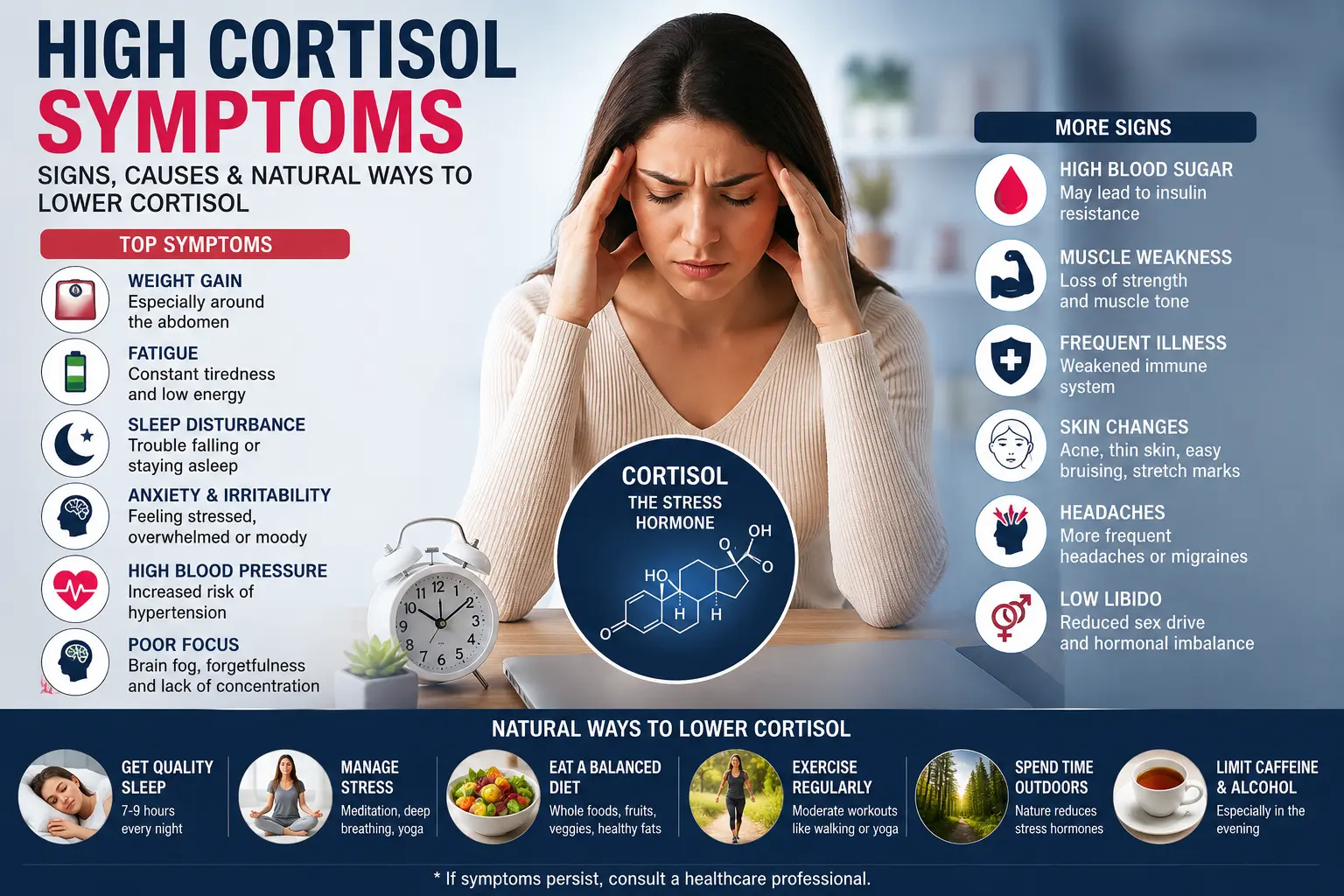
Stress is a normal part of life, but when stress becomes chronic, your body may produce too much cortisol—often called the stress hormone. While cortisol plays an essential role in regulating metabolism, blood pressure, inflammation, and your body’s response to stress, consistently high levels can affect nearly every organ system.
Recognising high cortisol symptoms early can help prevent long-term health complications. In this guide, you’ll learn the warning signs, common causes, diagnosis, treatment options, and evidence-based ways to lower cortisol naturally.
What Is Cortisol?
Cortisol is a hormone produced by the adrenal glands, located above your kidneys. It helps your body:
- Respond to stress
- Regulate blood sugar
- Control blood pressure
- Reduce inflammation
- Maintain energy levels
- Support the sleep-wake cycle
Normally, cortisol levels are highest in the morning and gradually decline throughout the day. However, chronic stress or certain medical conditions can disrupt this natural rhythm.
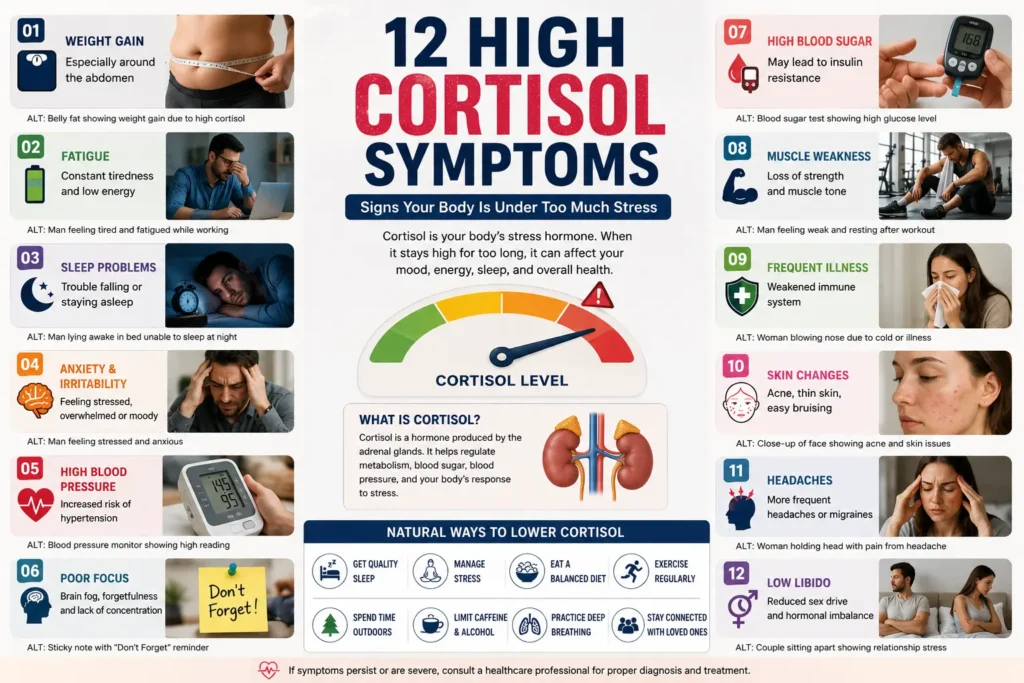
12 Common High Cortisol Symptoms
1. Rapid Weight Gain Around the Abdomen
One of the most noticeable symptoms is increased fat around the belly and upper back. High cortisol encourages fat storage, especially in the abdominal area.
2. Constant Fatigue
Even after a full night’s sleep, elevated cortisol can leave you feeling physically and mentally exhausted.
3. Difficulty Sleeping
High cortisol may make it difficult to fall asleep, stay asleep, or wake up feeling refreshed.
4. Increased Anxiety or Irritability
Excess cortisol affects the brain and may contribute to anxiety, mood swings, irritability, and feelings of being overwhelmed.
5. High Blood Pressure
Persistently elevated cortisol can increase blood pressure by affecting blood vessel function and fluid balance.
6. High Blood Sugar
Cortisol raises blood glucose to provide quick energy during stress. Over time, this may increase the risk of insulin resistance and type 2 diabetes.
7. Muscle Weakness
High cortisol can break down muscle protein, leading to reduced muscle strength and slower recovery after exercise.
8. Frequent Illness
Although cortisol temporarily suppresses inflammation, chronically high levels may weaken immune function, making infections more common.
9. Brain Fog and Poor Memory
Many people experience difficulty concentrating, forgetfulness, and reduced mental clarity.
10. Skin Changes
High cortisol may cause:
- Acne
- Easy bruising
- Slow wound healing
- Thin skin
- Purple stretch marks in severe cases
11. Headaches
Stress-related hormonal changes can trigger recurring headaches or migraines.
12. Reduced Sex Drive
Hormonal imbalance caused by elevated cortisol may reduce libido and affect reproductive hormones.
What Causes High Cortisol?
Several conditions and lifestyle factors can increase cortisol levels.
Chronic Stress: Long-term emotional, financial, or work-related stress is the most common cause.
Poor Sleep: Sleeping fewer than 7–9 hours regularly can disrupt cortisol regulation.
Certain Medications: Long-term use of corticosteroid medications such as prednisone can increase cortisol effects.
Cushing Syndrome: A rare medical condition where the body produces excessive cortisol due to adrenal or pituitary disorders.
Depression and Anxiety Disorders: Mental health conditions may alter cortisol production.
Intense Overtraining: Excessive exercise without enough recovery can temporarily raise cortisol.
Excessive Alcohol Consumption: Heavy drinking may interfere with normal hormone regulation.
Who Is at Higher Risk?
You may have a greater risk if you:
- Experience chronic stress
- Work night shifts
- Sleep poorly
- Have obesity
- Have diabetes
- Take long-term steroid medications
- Have adrenal or pituitary disorders
When Should You See a Doctor?
Contact a healthcare professional if you experience:
- Unexplained rapid weight gain
- Persistent fatigue
- Severe muscle weakness
- High blood pressure that’s difficult to control
- Purple stretch marks
- Frequent infections
- Symptoms lasting several weeks despite lifestyle changes
A doctor can determine whether your symptoms are caused by high cortisol or another medical condition.
How Is High Cortisol Diagnosed?
Diagnosis may include:
- Blood cortisol test
- Saliva cortisol test
- 24-hour urine cortisol test
- Dexamethasone suppression test
- CT scan or MRI (when a tumor is suspected)
Doctors often use multiple tests because cortisol naturally changes throughout the day.
Treatment for High Cortisol
Treatment depends on the underlying cause.
Options may include:
- Reducing chronic stress
- Treating Cushing syndrome
- Adjusting steroid medications (only under medical supervision)
- Managing anxiety or depression
- Improving sleep quality
- Treating underlying endocrine disorders
Never stop prescription corticosteroids without medical advice.
8 Natural Ways to Lower Cortisol
Prioritize Quality Sleep
Aim for 7–9 hours of sleep each night and maintain a consistent bedtime.
Exercise in Moderation
Regular walking, cycling, swimming, or strength training helps regulate stress hormones without overloading the body.
Eat a Balanced Diet
Choose:
- Fruits
- Vegetables
- Whole grains
- Lean protein
- Healthy fats
Limit sugary drinks and ultra-processed foods.
Practice Mindfulness
Meditation, yoga, breathing exercises, and prayer may help reduce stress levels.
Reduce Caffeine Late in the Day
Too much caffeine—especially in the afternoon or evening—may interfere with sleep and temporarily increase cortisol in some people.
Stay Connected
Spending time with supportive friends and family can help buffer the effects of stress.
Spend Time Outdoors
Nature exposure and sunlight may improve mood and help regulate your body’s internal clock.
Manage Your Work-Life Balance
Taking regular breaks, setting boundaries, and making time for hobbies can reduce chronic stress.
Can High Cortisol Be Prevented?
Not all causes are preventable, but healthy habits can reduce your risk:
- Sleep consistently
- Stay physically active
- Eat nutritious meals
- Manage stress daily
- Avoid smoking
- Limit alcohol
- Maintain a healthy weight
- Get regular medical checkups
Frequently Asked Questions
Can stress alone cause high cortisol?
Yes. Chronic psychological stress is one of the most common reasons for elevated cortisol levels.
How long does it take to lower cortisol naturally?
Some people notice improvements in sleep and stress within a few weeks of consistent lifestyle changes, though the timeline varies depending on the cause.
Which foods may help support healthy cortisol levels?
A balanced diet rich in fruits, vegetables, whole grains, nuts, seeds, fatty fish, and fermented foods supports overall hormone and metabolic health.
Is high cortisol dangerous?
Persistently high cortisol may increase the risk of obesity, diabetes, high blood pressure, osteoporosis, mood disorders, and heart disease if left untreated.
Key Takeaway
Cortisol is essential for good health, but chronically elevated levels can affect your body from head to toe. Recognizing high cortisol symptoms—such as abdominal weight gain, fatigue, poor sleep, anxiety, and high blood pressure—can help you seek appropriate care sooner.
In many cases, improving sleep, managing stress, eating a balanced diet, and staying physically active can support healthy cortisol regulation. If symptoms are severe or persistent, consult a healthcare professional for evaluation and treatment.
References
- National Institute of Diabetes and Digestive and Kidney Diseases (NIDDK). Cushing’s Syndrome. https://www.niddk.nih.gov/health-information/endocrine-diseases/cushings-syndrome
- Mayo Clinic. Cushing Syndrome. https://www.mayoclinic.org/diseases-conditions/cushing-syndrome
- Cleveland Clinic. Cortisol. https://my.clevelandclinic.org/health/articles/22187-cortisol
- Endocrine Society. Hormone Health Network: Cushing Syndrome. https://www.endocrine.org
- MedlinePlus. Cortisol Test. https://medlineplus.gov/lab-tests/cortisol-test/
