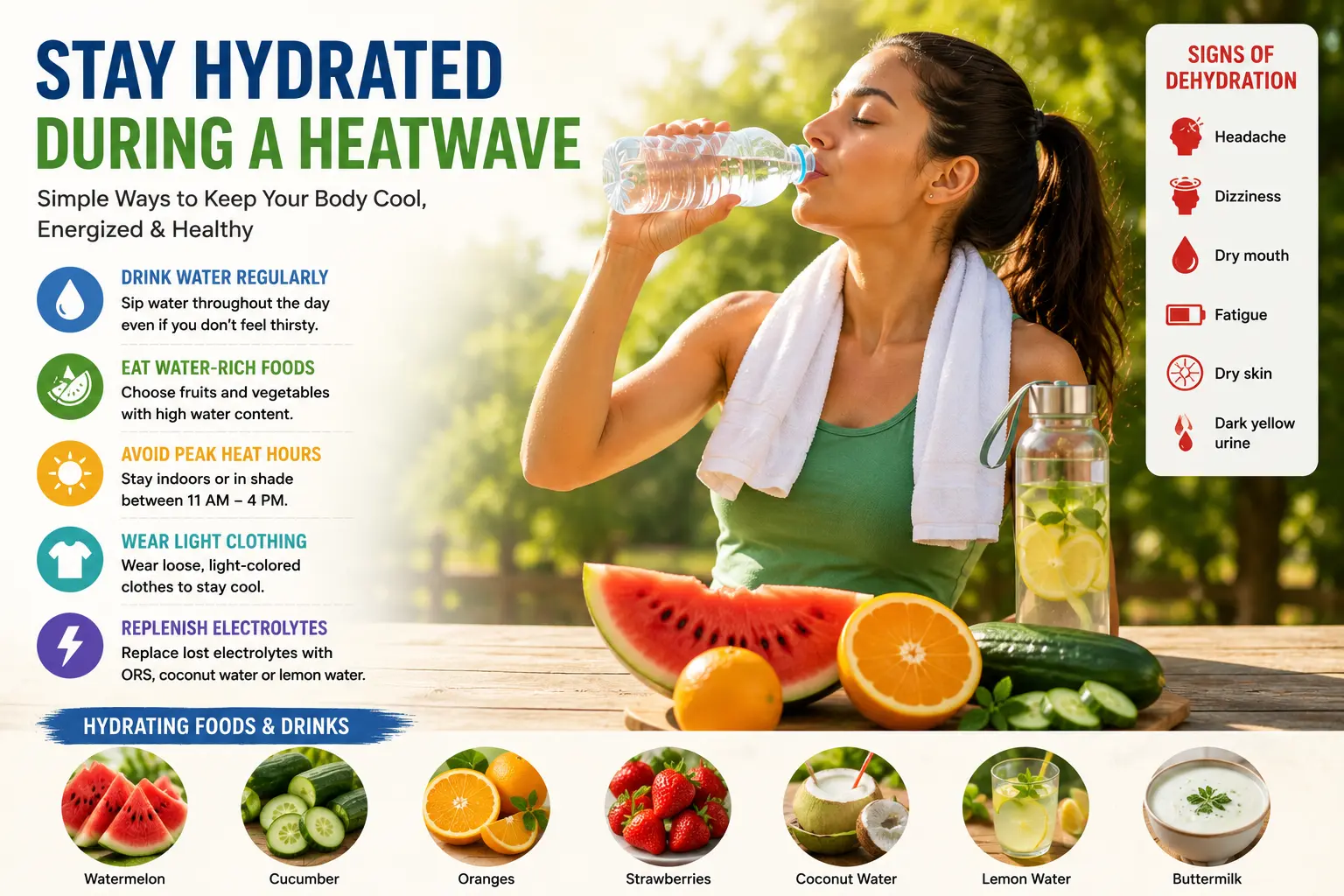
When temperatures soar during the summer, staying hydrated becomes more important than ever. A heatwave doesn’t just make you feel uncomfortable—it can also increase your risk of dehydration, heat exhaustion, and even heatstroke if your body loses too much water.
Many people believe drinking a few extra glasses of water is enough, but proper hydration is much more than simply quenching your thirst. Your body also loses essential minerals known as electrolytes through sweat, and replacing both fluids and electrolytes is necessary for maintaining normal body functions.
Whether you’re working outdoors, exercising, traveling, or spending time with family, understanding how to stay hydrated during a heatwave can help protect your health and keep your body functioning at its best.
In this comprehensive guide, you’ll learn why hydration matters, recognize the early warning signs of dehydration, and discover practical, science-backed strategies to stay safe during extremely hot weather.
What Is a Heatwave?
A heatwave is a prolonged period of unusually high temperatures that lasts for several days or even weeks. Heatwaves often occur alongside high humidity, making it more difficult for sweat to evaporate from your skin.
Sweating is your body’s natural cooling system. However, excessive sweating causes your body to lose large amounts of water and electrolytes. If these losses are not replaced, dehydration develops, affecting nearly every organ in your body.
Climate experts report that heatwaves are becoming more frequent and more intense worldwide, making heat safety an increasingly important public health concern.
Why Staying Hydrated During a Heatwave Is So Important
Water makes up nearly 60% of the human body and supports countless biological functions. During extreme heat, your body requires even more water to regulate its internal temperature.
Proper hydration helps:
- Maintain normal body temperature
- Support healthy blood circulation
- Deliver nutrients to cells
- Lubricate joints
- Improve digestion
- Support kidney function
- Prevent muscle cramps
- Maintain brain function
- Reduce fatigue during hot weather
When your body doesn’t receive enough fluids, it begins conserving water, which affects circulation, cooling ability, and organ performance.
Even mild dehydration can reduce physical performance, concentration, mood, and energy levels.
How Your Body Loses Water in Hot Weather
Most people think sweating is the only way the body loses water, but that’s only part of the story.
During a heatwave, your body loses fluids through:
Sweating
Sweating is the largest source of water loss during hot weather. As sweat evaporates, it cools your body.
Breathing
Every breath releases a small amount of moisture. During high temperatures or physical activity, this water loss increases.
Urination
Your kidneys regulate fluid balance by removing excess water through urine.
Digestion
Small amounts of water are also lost through bowel movements.
When temperatures rise dramatically, sweating increases significantly, making dehydration much more likely if fluids are not replaced.
Understanding Dehydration
Dehydration occurs when your body loses more fluids than it takes in.
This imbalance affects normal body functions and can become dangerous if left untreated.
There are three common stages:
Mild Dehydration: Your body has lost a small amount of fluid, but symptoms are usually manageable.
Moderate Dehydration: Physical performance declines, and noticeable symptoms develop.
Severe Dehydration: This is a medical emergency that requires immediate treatment.
Early Signs of Dehydration You Should Never Ignore
Recognizing dehydration early can prevent serious health problems.
Common early symptoms include:
- Feeling thirsty
- Dry mouth
- Dry lips
- Sticky saliva
- Headache
- Fatigue
- Weakness
- Dark yellow urine
- Dizziness
- Reduced concentration
Many people mistake these symptoms for ordinary tiredness, allowing dehydration to worsen.
Warning Signs of Severe Dehydration
Seek immediate medical care if you experience:
- Confusion
- Fainting
- Rapid heartbeat
- Extremely dry skin
- Very little or no urine
- Sunken eyes
- Rapid breathing
- Difficulty walking
- High body temperature
Severe dehydration can quickly progress into heatstroke, which is a life-threatening medical emergency.
Who Is Most at Risk During a Heatwave?
Although everyone should stay hydrated during hot weather, some groups face a much higher risk.
- Older Adults
- As people age, the sensation of thirst naturally decreases, making dehydration more likely.
- Infants and Young Children
- Children lose fluids more quickly than adults and often cannot recognize early dehydration symptoms.
- Outdoor Workers
- Construction workers, farmers, delivery personnel, and others working outside lose significant amounts of water through continuous sweating.
- Athletes
- Exercise during high temperatures dramatically increases fluid and electrolyte loss.
- Pregnant Women
- Pregnancy increases fluid requirements because the body supports both the mother and developing baby.
- People With Chronic Illnesses
- Conditions such as diabetes, kidney disease, and heart disease may increase dehydration risk.
How Much Water Should You Drink During a Heatwave?
There isn’t a single amount that works for everyone because hydration needs depend on:
- Age
- Body weight
- Physical activity
- Climate
- Overall health
- Humidity levels
General daily recommendations include:
- Women: Approximately 2.7 liters (11.5 cups) of total fluids per day.
- Men: Approximately 3.7 liters (15.5 cups) of total fluids per day.
During a heatwave, people who sweat heavily may need significantly more fluids than these general recommendations.
Rather than waiting until you’re thirsty, sip water consistently throughout the day to help maintain hydration.
Why Electrolytes Matter as Much as Water
Many people focus only on drinking water, but electrolytes are equally important during hot weather.
Electrolytes are minerals that help regulate:
- Muscle contractions
- Nerve signals
- Heart rhythm
- Fluid balance
- Blood pressure
The most important electrolytes include:
- Sodium
- Potassium
- Magnesium
- Calcium
- Chloride
Heavy sweating removes these minerals along with water. If they’re not replaced after prolonged sweating, you may experience muscle cramps, weakness, dizziness, or fatigue.
Can You Drink Too Much Water?
Although dehydration is more common during a heatwave, drinking excessive amounts of water in a short period can also be harmful because it may dilute sodium levels in the blood.
The healthiest approach is to drink water steadily throughout the day and include electrolyte-rich foods or beverages when you’ve been sweating heavily.
Best Ways to Stay Hydrated During a Heatwave
Staying hydrated isn’t just about drinking more water. The right combination of fluids, hydrating foods, healthy habits, and avoiding dehydration triggers can help your body cope with extreme heat more effectively. Here are expert-backed strategies to stay safe and hydrated during a heatwave.
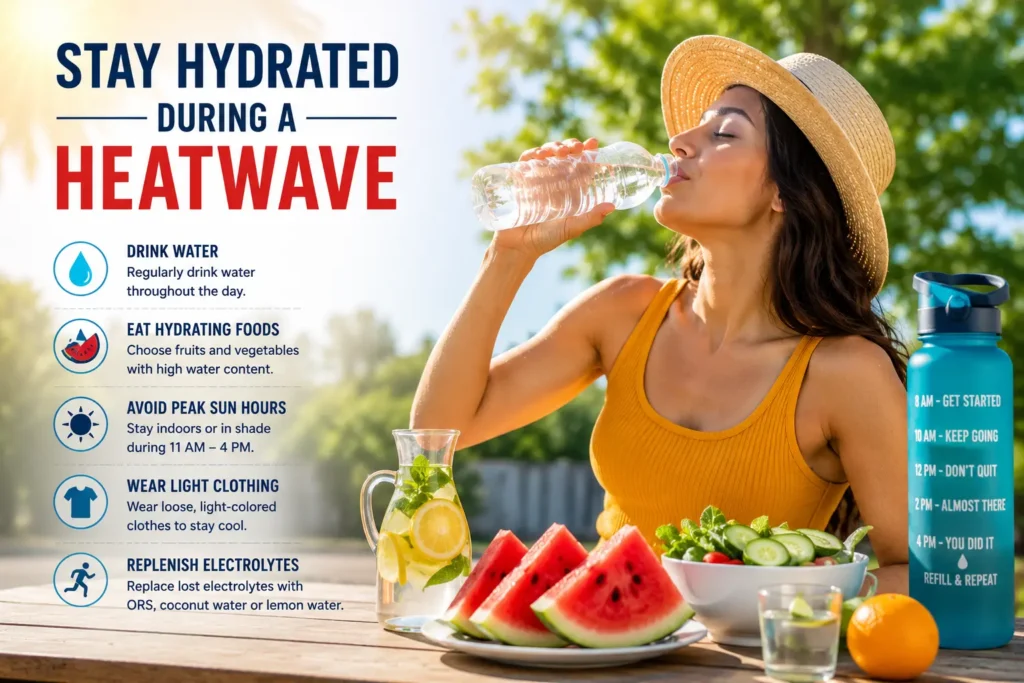
Drink Water Consistently Throughout the Day
One of the biggest mistakes people make is waiting until they feel thirsty. Thirst is often a sign that your body has already started losing fluids.
Instead of drinking a large amount of water at once, take small sips regularly throughout the day. Keeping a reusable water bottle nearby can serve as a simple reminder to drink more often.
If you’re spending time outdoors or exercising, increase your fluid intake before, during, and after physical activity.
Choose Water-Rich Foods
Many fruits and vegetables contain over 90% water, making them excellent for staying hydrated while also providing essential vitamins, minerals, and antioxidants.
Best Hydrating Foods
| Food | Approximate Water Content |
|---|---|
| Cucumber | 96% |
| Lettuce | 96% |
| Celery | 95% |
| Tomato | 95% |
| Zucchini | 94% |
| Watermelon | 92% |
| Strawberries | 91% |
| Oranges | 87% |
| Cantaloupe | 90% |
| Bell Peppers | 92% |
Including these foods in your meals and snacks can help increase your daily fluid intake naturally.
Replace Lost Electrolytes
Sweating causes your body to lose important minerals like sodium, potassium, and magnesium.
If you’ve been sweating heavily, consider replacing electrolytes with healthy options such as:
- Oral Rehydration Solution (ORS)
- Coconut water
- Homemade lemon water with a pinch of salt
- Low-sugar electrolyte drinks
- Yogurt-based drinks like buttermilk
For everyday activities, plain water is usually enough. Electrolyte replacement becomes more important after prolonged outdoor work, intense exercise, or excessive sweating.
Stay Cool Whenever Possible
Reducing heat exposure helps your body lose less water through sweat.
Try these simple tips:
- Stay indoors during the hottest part of the day (usually 11 AM to 4 PM).
- Use fans or air conditioning if available.
- Close curtains or blinds during peak sunlight.
- Wear lightweight, loose-fitting, light-colored clothing.
- Take cool showers if you feel overheated.
Avoid Dehydrating Beverages
Some drinks can increase fluid loss or contribute to dehydration.
Limit:
- Alcohol
- Sugary soft drinks
- Energy drinks
- Excessive caffeinated beverages
- Sweetened fruit drinks
Instead, choose healthier alternatives like plain water, infused water, coconut water, or herbal tea.
Monitor Your Hydration
A simple way to check your hydration status is by observing the color of your urine.
| Urine Color | Hydration Status |
|---|---|
| Pale yellow | Well hydrated |
| Light yellow | Normal hydration |
| Dark yellow | Drink more fluids |
| Amber or brown | Possible dehydration; seek medical advice if persistent |
This is not a perfect indicator, but it can be a helpful daily guide.
Special Hydration Tips for Different Age Groups
Children
Children lose fluids faster than adults and may not recognize the signs of dehydration.
Parents should:
- Encourage regular water breaks.
- Offer fruits like watermelon and oranges.
- Avoid prolonged outdoor play during peak heat.
- Watch for symptoms such as irritability, dry mouth, or fewer wet diapers in infants.
Older Adults
Older adults may not feel thirsty even when dehydrated.
Helpful habits include:
- Drinking water on a schedule.
- Keeping a water bottle within easy reach.
- Eating water-rich foods.
- Staying in cool environments.
- Discussing fluid needs with a healthcare provider if taking medications that affect hydration.
Athletes and Outdoor Workers
People who exercise or work outside lose significantly more fluids through sweat.
Recommendations include:
- Drink water before starting activity.
- Take regular hydration breaks.
- Replace electrolytes after prolonged sweating.
- Wear breathable clothing.
- Rest in shaded or cool areas whenever possible.
Common Hydration Myths
Myth: You only need water when you’re thirsty.
Fact: Thirst is a late signal. Drinking fluids regularly throughout the day is a better strategy.
Myth: Ice-cold water hydrates better.
Fact: Water temperature has little effect on hydration. The most important thing is drinking enough fluids.
Myth: Coffee always causes dehydration.
Fact: Moderate coffee consumption generally does not cause significant dehydration in healthy adults. However, excessive caffeine intake should be avoided during very hot weather.
Myth: Sports drinks are always healthier than water.
Fact: Sports drinks can help replace electrolytes after prolonged, intense exercise, but they often contain added sugar. For most daily activities, plain water is the healthiest choice.
When Should You Seek Medical Help?
Seek immediate medical attention if you or someone else experiences:
- Confusion or unusual behavior
- Fainting
- Persistent vomiting
- Difficulty breathing
- High body temperature
- Rapid heartbeat
- Seizures
- Inability to drink fluids
These symptoms may indicate severe dehydration or heatstroke, both of which require urgent medical care.
Final Thoughts
Knowing how to stay hydrated during a heatwave is one of the simplest and most effective ways to protect your health during extreme temperatures. Staying hydrated isn’t only about drinking more water—it also involves eating water-rich foods, replacing electrolytes when needed, limiting dehydrating beverages, and avoiding prolonged heat exposure.
Pay attention to your body’s signals, make hydration a daily habit, and encourage your family members to do the same. These small but consistent actions can help reduce the risk of dehydration, heat exhaustion, and other heat-related illnesses throughout the summer.
Frequently Asked Questions (FAQs)
How much water should I drink during a heatwave?
Fluid needs vary depending on age, activity level, and weather conditions. Most healthy adults should drink water regularly throughout the day and increase intake if sweating heavily.
Is coconut water good for hydration?
Yes. Coconut water contains natural electrolytes and can help replace minerals lost through sweating. It should complement—not replace—regular water intake.
Which fruits are best for hydration?
Watermelon, cucumber, strawberries, oranges, cantaloupe, and tomatoes are among the most hydrating foods due to their high water content.
Can dehydration happen indoors?
Yes. Indoor environments without proper cooling or ventilation can still lead to dehydration, especially if you’re not drinking enough fluids.
What is the fastest way to rehydrate?
For mild dehydration, drinking water gradually is usually effective. If you’ve lost a lot of fluids through heavy sweating, vomiting, or diarrhea, an oral rehydration solution (ORS) may help replace both fluids and electrolytes.
References
- Centers for Disease Control and Prevention (CDC). Heat and Your Health. https://www.cdc.gov/heat-health/
- World Health Organization (WHO). Climate Change and Health. https://www.who.int/health-topics/climate-change
- MedlinePlus. Dehydration. https://medlineplus.gov/dehydration.html
- National Institute on Aging (NIA). Hot Weather Safety for Older Adults. https://www.nia.nih.gov/health/safety/hot-weather-safety-older-adults
- National Heart, Lung, and Blood Institute (NHLBI). Your Guide to a Healthy Heart. https://www.nhlbi.nih.gov/
