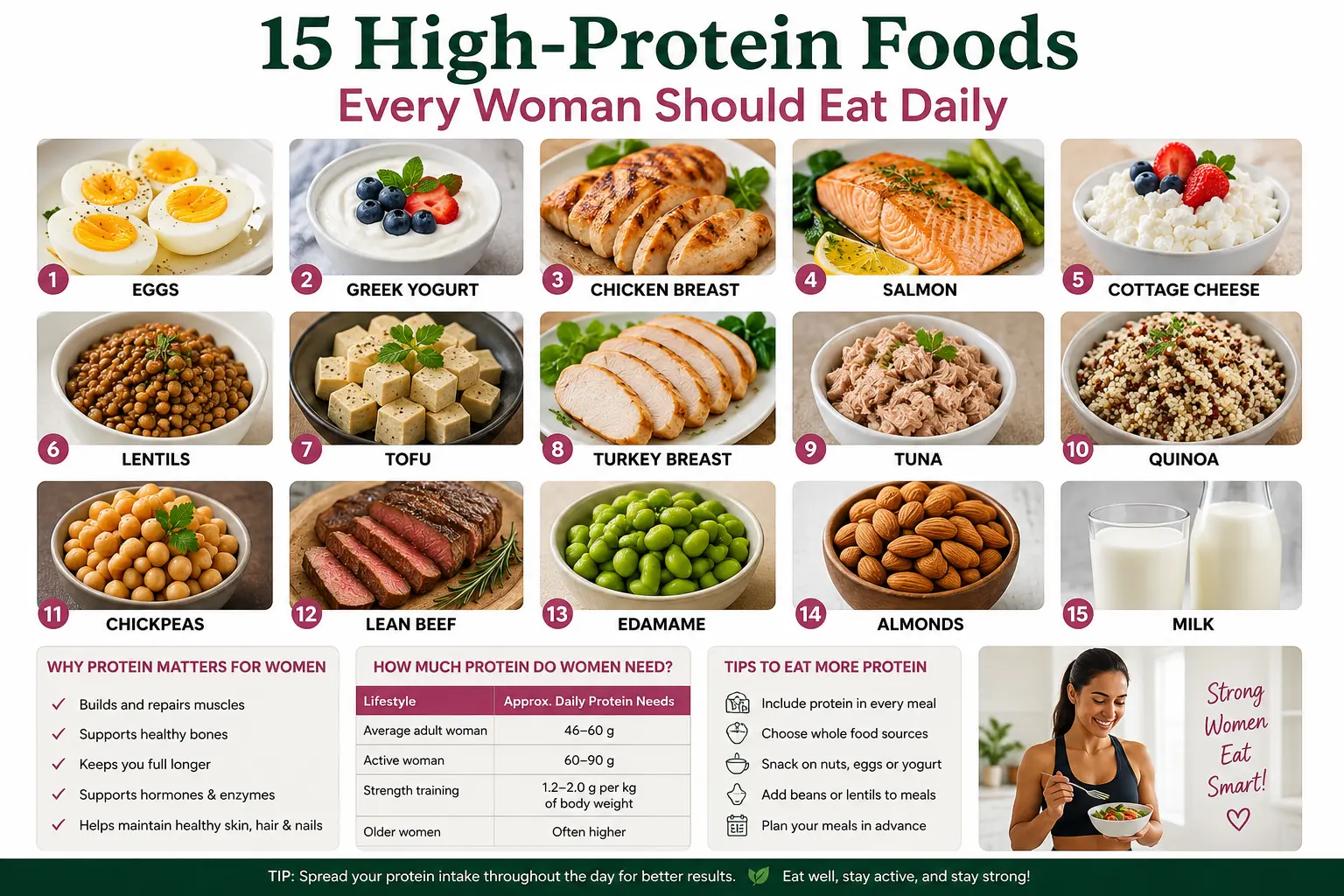
Protein is often associated with athletes and bodybuilders, but the truth is that every woman needs enough protein to stay healthy. From supporting lean muscle and strong bones to helping you feel satisfied after meals, protein plays an important role at every stage of life.
Whether you’re a college student, a busy professional, an active mom, or entering menopause, your body depends on protein to repair tissues, produce enzymes and hormones, and maintain overall health. Yet many women don’t consume enough high-quality protein throughout the day, especially when meals are centered around refined carbohydrates instead of nutrient-dense foods.
The good news is that increasing your protein intake doesn’t have to be complicated. Everyday foods such as eggs, Greek yogurt, chicken, beans, lentils, fish, and tofu provide excellent sources of protein while also delivering vitamins, minerals, and other essential nutrients.
In this guide, you’ll discover the 15 best protein foods for women, learn why protein is important, how much you may need each day, and simple ways to add more protein to your meals without relying on supplements.
Why Protein Is Important for Women
Protein is made up of amino acids, which are often called the building blocks of the body. Every cell relies on protein to grow, repair, and function properly. Unlike carbohydrates and fats, the body doesn’t store large amounts of protein, making regular intake through food especially important.
Getting enough protein may help:
- Support lean muscle maintenance
- Keep you feeling full between meals
- Promote healthy bones
- Aid tissue repair after physical activity
- Support healthy hair, skin, and nails
- Contribute to normal immune function
Women who exercise regularly, are pregnant or breastfeeding, or are over the age of 50 may have higher protein needs. A registered dietitian or healthcare professional can help determine the amount that’s appropriate for your individual lifestyle and health goals.
How Much Protein Do Women Need?
Protein needs vary based on age, activity level, and overall health.
General recommendations include:
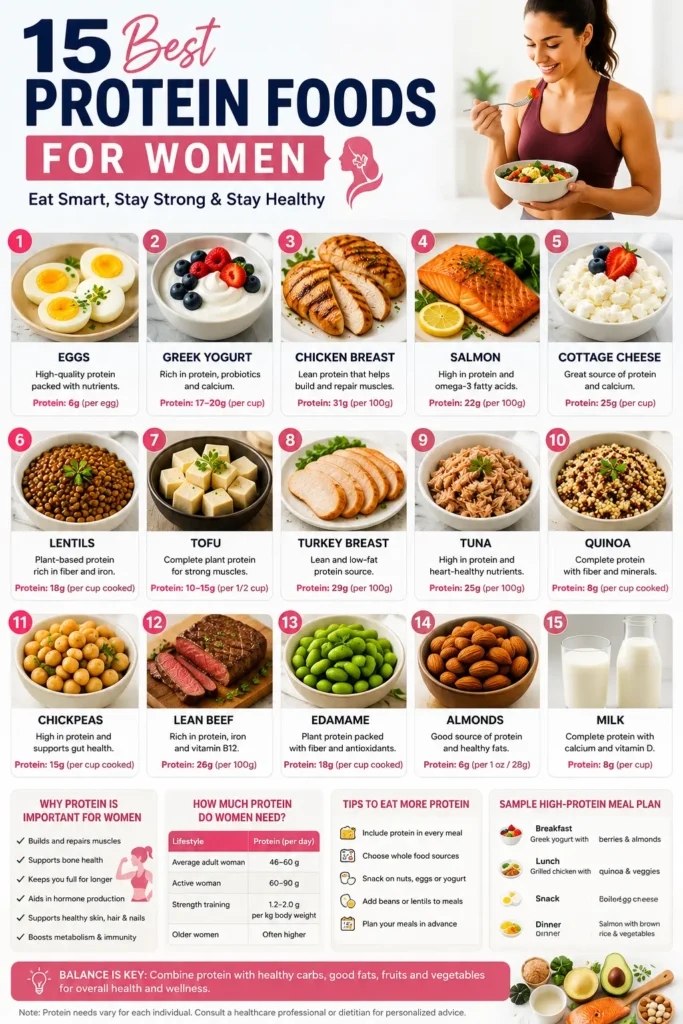
| Lifestyle | Approximate Daily Protein Needs |
|---|---|
| Average adult woman | 46–60 g |
| Active woman | 60–90 g |
| Strength training | 1.2–2.0 g per kg of body weight |
| Older women | Often higher than younger adults |
Rather than consuming most of your protein in one meal, many nutrition experts recommend spreading protein intake throughout the day to support muscle maintenance and satiety.
15 High-Protein Foods Every Woman Should Eat
1. Eggs
Eggs are one of the most nutritious and affordable protein-rich foods available. A large egg provides about 6 grams of high-quality protein along with vitamins B12, D, selenium, and choline, a nutrient that supports normal brain function.
Because eggs contain all nine essential amino acids, they’re considered a complete protein. They’re also incredibly versatile—you can enjoy them boiled, scrambled, poached, or added to salads and sandwiches.
Protein: ~6 g per large egg
2. Greek Yogurt
Greek yogurt is packed with protein and also provides calcium and probiotics that support digestive and bone health. Compared with regular yogurt, Greek yogurt is strained to remove more liquid, resulting in a thicker texture and a higher protein content.
Choose plain, unsweetened varieties whenever possible and add fresh berries, nuts, or seeds for extra nutrition.
Protein: ~17–20 g per serving
3. Chicken Breast
Chicken breast is one of the leanest and most popular protein sources. It’s naturally low in saturated fat while providing plenty of complete protein, making it a favorite among people focused on fitness or healthy eating.
Grilled, baked, or roasted chicken pairs well with vegetables, whole grains, and salads.
Protein: ~31 g per 100 g
4. Salmon
Salmon offers more than just protein. It’s also rich in omega-3 fatty acids, which support heart and brain health. Including fatty fish like salmon in your diet once or twice a week can help you meet both your protein and healthy fat needs.
Protein: ~22 g per 100 g
5. Cottage Cheese
Cottage cheese is an excellent high-protein dairy food that’s also a good source of calcium. It makes a satisfying breakfast, snack, or post-workout option.
Pair it with fruit for a naturally sweet snack or use it in savory dishes like wraps and salads.
6. Lentils
Lentils are one of the best plant-based protein sources and are naturally rich in fiber, iron, and folate. They’re a great option for vegetarians and vegans looking to increase protein intake.
Adding lentils to soups, curries, salads, or grain bowls can make meals more filling while providing important nutrients.
Protein: ~18 g per cooked cup
7. Tofu
Made from soybeans, tofu is a complete plant protein that contains all nine essential amino acids. It absorbs flavors well, making it a versatile ingredient for stir-fries, salads, and grilled dishes.
Tofu is also a good source of calcium when prepared with calcium sulfate.
Protein: ~10–15 g per serving
8. Turkey Breast
Turkey breast is another lean protein source that’s naturally low in fat and high in protein. It works well in sandwiches, wraps, salads, or as part of a balanced dinner.
Protein: ~29 g per 100 g
9. Tuna
Tuna is convenient, affordable, and packed with high-quality protein. Choose tuna canned in water and enjoy it in sandwiches, salads, or pasta dishes.
For pregnant women, follow local health recommendations regarding fish consumption due to mercury concerns.
Protein: ~25 g per 100 g
10. Quinoa
Unlike most grains, quinoa contains all essential amino acids, making it a complete protein. It’s also rich in fiber, magnesium, and several important minerals.
Protein: ~8 g per cooked cup
11. Chickpeas
Chickpeas provide both protein and fiber, making them a satisfying addition to salads, soups, and homemade hummus.
Protein: ~15 g per cooked cup
12. Lean Beef
Lean cuts of beef supply complete protein along with iron, zinc, and vitamin B12, nutrients that are especially important for many women.
Choose lean cuts and enjoy them as part of a balanced diet.
Protein: ~26 g per 100 g
13. Edamame
Edamame are young soybeans that provide complete protein, fiber, and antioxidants.
They make an easy snack or side dish.
Protein: ~18 g per cooked cup
14. Almonds
Although almonds aren’t as protein-rich as meat or dairy, they provide protein along with healthy fats and vitamin E.
They’re perfect for healthy snacking.
Protein: ~6 g per ounce
15. Milk
Milk provides complete protein together with calcium, phosphorus, and vitamin D (when fortified), supporting healthy bones and muscles.
Choose the type that best fits your nutritional needs.
Protein: ~8 g per cup
Animal vs. Plant Protein
Both animal and plant proteins can be part of a healthy eating pattern.
Animal Protein
- Chicken
- Fish
- Eggs
- Dairy
- Turkey
- Lean beef
Benefits
- Complete protein
- Rich in vitamin B12
- Highly bioavailable
Plant Protein
- Lentils
- Tofu
- Chickpeas
- Quinoa
- Edamame
- Nuts
Benefits
- High in fiber
- Naturally cholesterol-free
- Rich in plant nutrients
Including a mix of both can help provide a wide range of nutrients.
Simple High-Protein Meal Plan
- Breakfast
- Greek yogurt with berries and almonds
- Morning Snack
- Boiled eggs
Lunch
- Grilled chicken, quinoa, and vegetables
Afternoon Snack
- Cottage cheese with fruit
Dinner
- Baked salmon with brown rice and broccoli
Tips to Increase Protein Intake
- Include a protein source with every meal.
- Choose Greek yogurt instead of regular yogurt.
- Add beans or lentils to soups and salads.
- Snack on nuts, cottage cheese, or boiled eggs.
- Replace refined snacks with protein-rich options.
- Plan meals in advance to help meet your daily protein needs.
Common Mistakes Women Make
- Eating most of their protein only at dinner.
- Relying heavily on processed snack foods.
- Skipping breakfast.
- Ignoring plant-based protein sources.
- Depending solely on protein supplements instead of whole foods.
The Bottom Line
Protein is an essential part of a healthy diet for women at every stage of life. Whether your goal is to maintain muscle, support an active lifestyle, or simply eat more balanced meals, choosing a variety of protein-rich foods can help you meet your nutritional needs.
Instead of relying on one food, aim to include a mix of lean meats, fish, dairy, legumes, soy foods, nuts, and whole grains throughout the week. 15 Best Protein Foods for Women Pair these choices with fruits, vegetables, healthy fats, and regular physical activity for long-term wellness.
Frequently Asked Questions
What is the best protein food for women?
There isn’t a single “best” food. Eggs, Greek yogurt, chicken, salmon, lentils, tofu, and cottage cheese are all excellent choices.
How much protein should women eat daily?
Protein needs vary by age, activity level, and health status. Many women need around 46 grams per day, while active women and athletes often require more.
Are plant proteins as good as animal proteins?
Yes. Plant proteins can support a healthy diet. Eating a variety of plant-based protein sources helps ensure adequate intake of essential amino acids.
Can eating more protein help with weight management?
Protein-rich foods may increase feelings of fullness and help preserve muscle during weight-loss efforts when combined with a balanced diet and regular physical activity.
Do women need protein supplements?
Not necessarily. Most women can meet their protein needs through whole foods. Supplements may be helpful in some situations but should not replace a balanced diet.
References
- Harvard T.H. Chan School of Public Health – The Nutrition Source: Protein
https://nutritionsource.hsph.harvard.edu/protein/ - National Institutes of Health (NIH) – Office of Dietary Supplements
https://ods.od.nih.gov - Academy of Nutrition and Dietetics – Protein Foods
https://www.eatright.org - Mayo Clinic – Nutrition Basics
https://www.mayoclinic.org - MedlinePlus – Nutrition
https://medlineplus.gov
