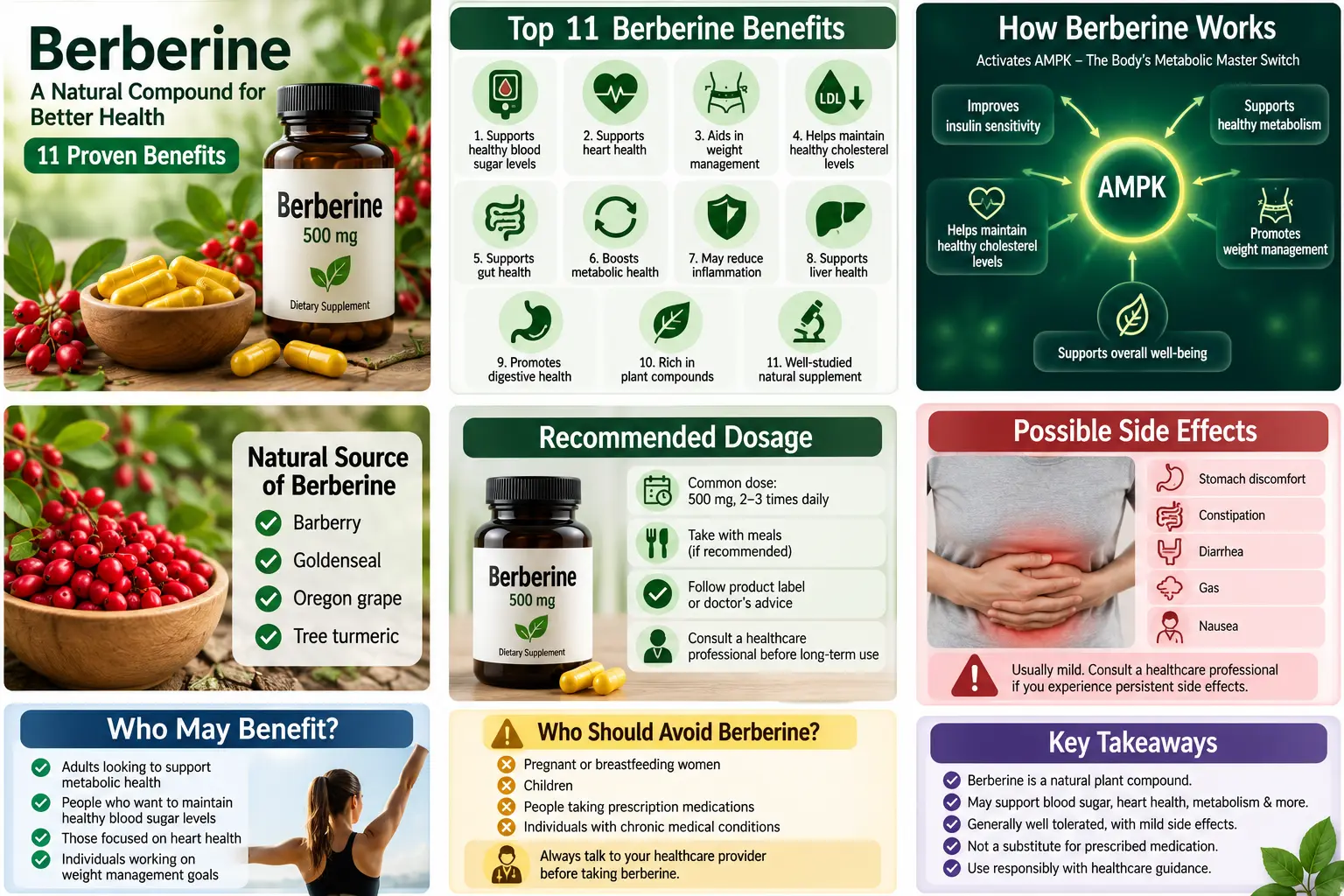
Berberine is a natural compound found in several plants, including barberry, goldenseal, Oregon grape, and tree turmeric. For centuries, it has been used in traditional Chinese and Ayurvedic medicine. Today, berberine has gained worldwide attention because researchers have studied its potential role in supporting healthy blood sugar levels, heart health, weight management, and metabolism.
Unlike many dietary supplements that have limited research, berberine has been the subject of numerous scientific studies. While the findings are promising, it’s important to understand that berberine is not a miracle cure and should never replace medical treatment prescribed by your healthcare provider.
In this guide, you’ll learn the science-backed berberine benefits, how it works, who may benefit from it, and important safety information before considering supplementation.
What Is Berberine?
Berberine is a naturally occurring plant alkaloid extracted from several medicinal herbs. It has been used in traditional medicine for hundreds of years, but modern research has focused on its effects on metabolism and overall health.
Scientists believe berberine works by activating an enzyme called AMP-activated protein kinase (AMPK), sometimes referred to as the body’s “metabolic master switch.” This enzyme helps regulate how the body uses energy and may influence blood sugar, fat metabolism, and cellular function.
Although berberine is available as a dietary supplement, it should be taken responsibly and under medical guidance if you have an existing health condition or take prescription medications.
11 Berberine Benefits
1. May Help Support Healthy Blood Sugar Levels
One of the most studied berberine benefits is its potential to support healthy blood sugar levels in adults.
Research suggests berberine may help improve insulin sensitivity and support normal glucose metabolism. However, people with diabetes should never replace prescribed medications with berberine without consulting their healthcare provider.
2. Supports Heart Health
Heart health depends on several lifestyle factors, including diet, exercise, and maintaining healthy cholesterol levels.
Some studies suggest berberine may support cardiovascular health by helping maintain healthy lipid levels already within the normal range. More research is still ongoing, but current findings are encouraging.
3. May Support Weight Management
Maintaining a healthy weight involves balanced nutrition, regular exercise, quality sleep, and consistent lifestyle habits.
Some research indicates that berberine may support healthy metabolism, which could assist weight management efforts when combined with a healthy diet and physical activity.
Unlike fad weight-loss supplements, berberine benefits should be viewed as one part of an overall healthy lifestyle rather than a quick solution.
4. Supports Healthy Cholesterol Levels
Cholesterol plays an important role in the body, but maintaining healthy levels is essential for long-term cardiovascular health.
Research has explored berberine’s potential role in supporting healthy LDL cholesterol and triglyceride levels. These findings are promising, although supplementation should always complement—not replace—healthy eating habits and medical advice.
5. May Support Gut Health
The digestive system contains trillions of beneficial microorganisms that influence overall health.
Emerging research suggests berberine may affect the balance of gut bacteria, although more high-quality human studies are needed to fully understand these effects.
Supporting gut health through a balanced diet, fiber-rich foods, and healthy lifestyle habits remains essential.
6. May Support Metabolic Health
Berberine has attracted attention for its potential role in supporting overall metabolic health. Researchers believe this effect is largely related to its influence on AMP-activated protein kinase (AMPK), an enzyme involved in energy regulation.
A healthy metabolism helps the body efficiently convert food into energy and supports normal cellular function. However, berberine works best when combined with healthy eating habits, regular exercise, and adequate sleep.
7. May Help Reduce Inflammation
Inflammation is the body’s natural response to injury or infection, but long-term inflammation may contribute to various chronic health conditions.
Some laboratory and animal studies suggest berberine possesses anti-inflammatory properties. Human research is still developing, so more evidence is needed to fully understand its long-term effects.
8. Supports Liver Health
The liver plays a vital role in detoxification, metabolism, and nutrient storage.
Several studies have explored whether berberine benefits may support normal liver function, particularly in people with metabolic conditions. While the findings are encouraging, berberine should not be used as a treatment for liver disease without medical supervision.
Maintaining a balanced diet, limiting alcohol intake, and staying physically active remain the most effective ways to support liver health.
9. May Support Digestive Health
Berberine has traditionally been used to support digestive wellness.
Some research suggests it may help maintain a healthy balance of gut bacteria and support digestive function. Because digestive health is influenced by many factors, including diet and hydration, berberine should be considered only one part of an overall healthy lifestyle.
10. Rich in Plant Compounds
Berberine is a naturally occurring plant alkaloid found in herbs such as barberry, goldenseal, and Oregon grape.
Plant compounds like berberine benefits are widely studied for their biological activity, making them a topic of growing interest in nutritional science.
11. Well-Studied Natural Supplement
Compared with many herbal supplements, berberine has been evaluated in numerous scientific studies.
Although research continues, existing evidence suggests berberine may support several aspects of metabolic health when used appropriately. Still, it should never replace prescribed medications or professional medical care.

Who May Benefit from Berberine?
A healthcare provider may recommend berberine for certain adults based on their individual health needs.
Some people who may discuss berberine supplementation with their doctor include:
- Adults interested in supporting metabolic health
- Individuals looking to maintain healthy blood sugar levels already within the normal range
- People focused on heart health as part of a healthy lifestyle
- Adults working toward weight management goals
- Individuals following a healthcare provider’s nutritional recommendations
Berberine is not suitable for everyone, especially people taking prescription medications or those with chronic medical conditions.
Recommended Dosage
There is no single dosage that is appropriate for everyone.
Many studies have used 500 mg taken two to three times daily, but the right amount depends on your health, age, medications, and the specific supplement.
General recommendations:
- Follow the dosage instructions on the product label.
- Take berberine with meals if recommended.
- Avoid exceeding the suggested dose.
- Speak with a healthcare professional before long-term use.
Possible Side Effects
Berberine is generally well tolerated, but some people may experience:
- Mild stomach discomfort
- Constipation
- Diarrhea
- Gas
- Nausea
These side effects are usually mild and may improve as the body adjusts.
Drug Interactions
Berberine may interact with certain medications, including:
- Diabetes medications
- Blood pressure medications
- Blood thinners
- Some antibiotics
If you take prescription medication, consult your healthcare provider before using berberine supplements.
Conclusion
Berberine is a natural plant compound that has been widely studied for its potential role in supporting metabolic health, healthy blood sugar levels, heart health, and weight management. While the research is promising, berberine benefits is not a substitute for medical treatment or a healthy lifestyle.
If you are considering berberine benefits supplementation, speak with a qualified healthcare professional—especially if you have an existing medical condition or take prescription medications.
Frequently Asked Questions
Is berberine safe for daily use?
Many adults use berberine daily under professional guidance. Long-term use should always be discussed with a healthcare provider.
Can berberine help with weight loss?
Berberine may support healthy metabolism and weight management when combined with a balanced diet and regular exercise. It is not a weight-loss medication.
What is the best time to take berberine?
Many people take berberine with meals to improve tolerance and follow the directions provided on the supplement label.
Who should avoid berberine?
Pregnant or breastfeeding women, children, and people taking certain prescription medications should seek medical advice before using berberine.
Is berberine better than metformin?
Berberine and metformin are different. Metformin is a prescription medication, while berberine is a dietary supplement. They should not be considered interchangeable, and any treatment decisions should be made with a healthcare professional.
References
- National Center for Complementary and Integrative Health (NCCIH) – Herbal Supplements
https://www.nccih.nih.gov - National Institutes of Health (NIH) – Office of Dietary Supplements
https://ods.od.nih.gov - PubMed – Berberine Research
https://pubmed.ncbi.nlm.nih.gov - Mayo Clinic – Dietary Supplements
https://www.mayoclinic.org - Cleveland Clinic – Supplements and Wellness
https://my.clevelandclinic.org
